By Dave | 10 June 2022 | 0 Comments
The Different Types of RVs and Which Is Best For You
Modern urban people always have a vision for a gypsy-style lifestyle. People are eager to escape from the huge pressure of work. They are eager to have a mobile and comfortable home anytime and anywhere on the journey. According to the data, RVers spend 3-4 weeks of the year on RV trips. And a family of four traveling in an RV can save 27% to 62% on travel costs (airplane + hotel).
After the Covid 9 epidemic, people tend to the off-road trips that are more private and family-centric. More and more people have become accustomed to and like this way of travel. So, more people consider buying an RV. But, as a novice, do you know what types of RVs are there on the market? In this article, let's take a closer look.
In the Recreational Vehicle (RV) world, there are two main types. They are Motorhome and Towable trailer.
Motorhome has a self-propelled system. It is a vehicle that can drive without external driving force.
According to different chassis and size, it is divided into: Class A, Class B, Class C.
There is no need to link the trailer system like a trailer before traveling. It is easy to travel, but it is bulky and not suitable for trail or muddy road driving.
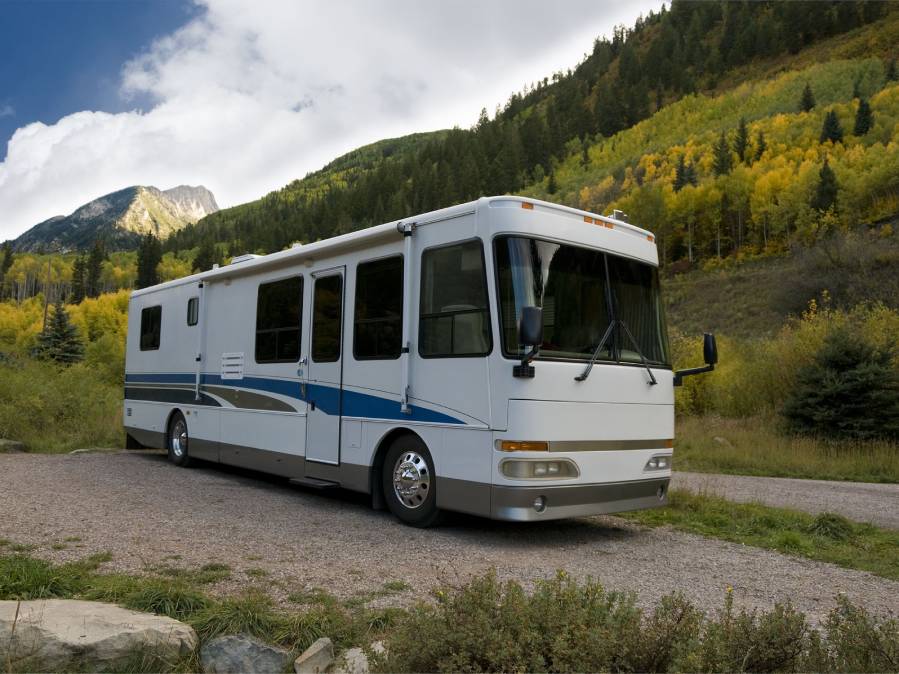
It is diesel or gasoline-powered and provides a very large living and living space. It has a suite and more than two bathrooms. It almost has all household appliances, like a washing machine, clothes dryer, ice maker, large double-door refrigerator, dishwasher, oven, etc. The storage space below is also quite large. It is more than enough to put down the luggage and outdoor equipment of a family of five.
As it is for non-commercial use, it does not need a business license. A general driver's license can be enough.
Pros:
Larger interior living space
More luggage storage space
More electrical options and better convenience
Cons:
New car prices are high
Not suitable for all kinds of road conditions
Repairs, maintenance, and insurance are expensive
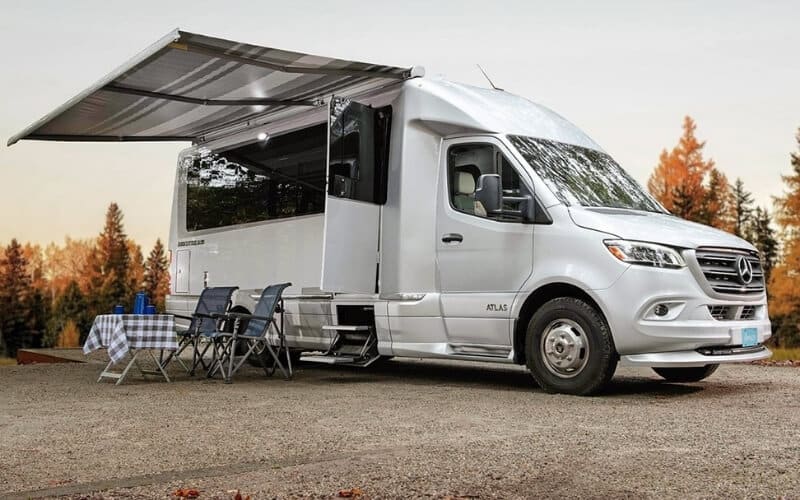
Most Class B motorhomes do not have slide-outs. But it can basically guarantee the bathroom and household appliances. There is no washing and drying equipment as standard. You need to use the laundry service provided by the campsites. Diesel or gasoline powered.
It is the least expensive of the three classes, with the price around $80,000 to $175,000.
Because the size is small, the driving experience is the best among the three types of motorhomes. It is suitable for different road conditions. Compared with Class A motorhomes, it is much easier to drive.
Pros:
Easy to drive and park
Simple to set up
Maintenance and petrol cost less
Cons:
Small electrical facilities and fewer options
Limited living and storage space
Only 1-2 people can travel at the same time
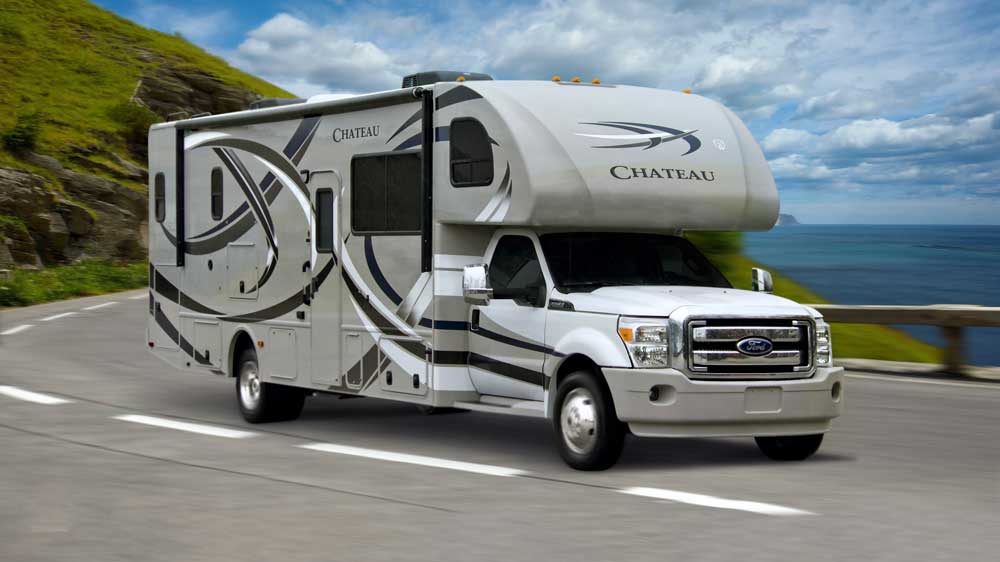
Compared to Class A motorhomes, they are cheaper and they have more space than Class B motorhomes.
A Class C motorhome typically has the price of $50,000 to $115,000.
Some larger models will have a master bedroom suite design, including a shower and various household appliances, similar to Class A motorhomes.
But, the driving experience is slightly inferior to the Class B motorhomes. And the fuel consumption, insurance, maintenance and repair are not cheap.
Pros:
Enough for the family of 4-8 to travel
Extra sleeping area above the cab
More electrical options
Cheaper than a Class A motorhome
Cons:
Maintenance and operating costs are not cheap
Poor driving quality
Before choosing a towable RV, you need to clarify your own needs. For example, how many people need to meet the travel needs at the same time, the towing capacity of your own vehicle, etc.
Towable RVs need to be linked to the towing system before and after the trip. But the price of the vehicle, maintenance, and insurance are much cheaper.
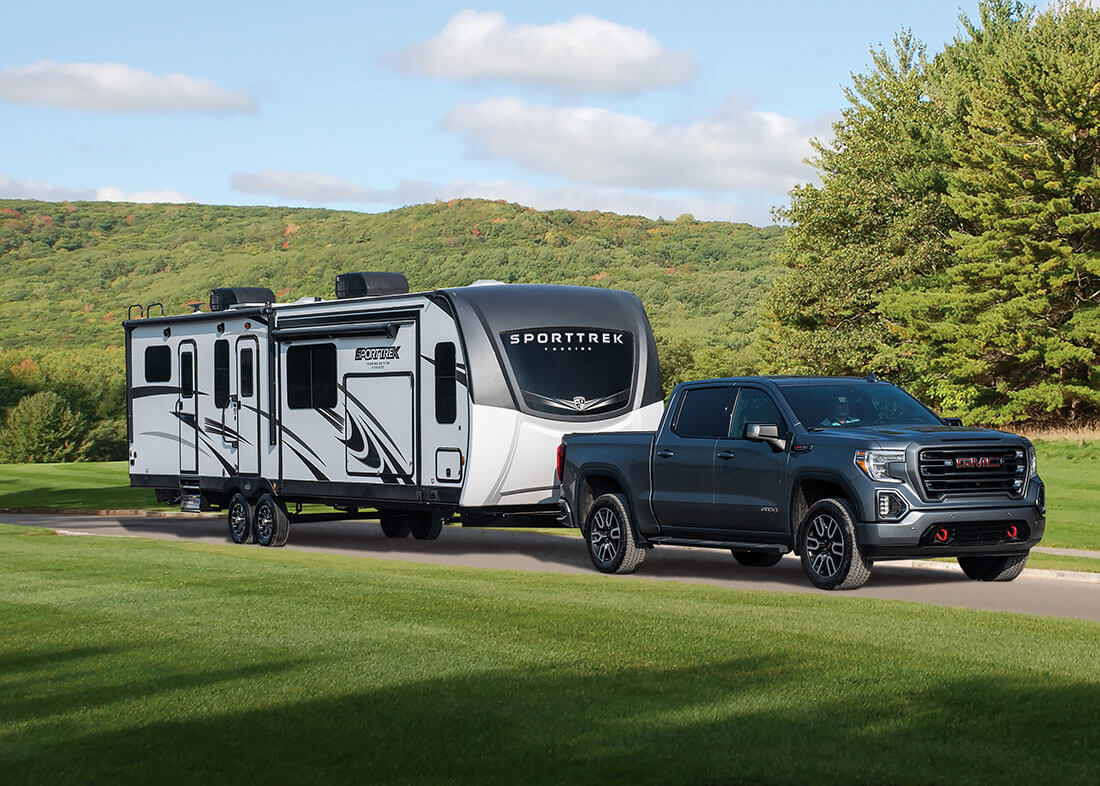
Travel trailers can be very small or very luxurious. It has its own water supply, battery, gas, and other systems. And it can be freely matched with household appliances such as refrigerators and washing dryers. Due to its very large span in size, length, and weight, it can be pulled by a small city SUV and also a large truck.
All trailer trailers have a common problem, that is, it is more difficult for beginners to control. Especially when reversing, you will find that the skills you learned before will not work in front of the trailer. You need to practice more and more. In addition, it requires further familiarity and practice in the installation and disassembly system, leveling, and support adjustment.
Pros:
There are many model options
Much cheaper than a motorhome
Can be used for long trips
Cons:
Poor maneuverability in some road conditions
Watch out for the wobble of the tail
Reversing is more difficult
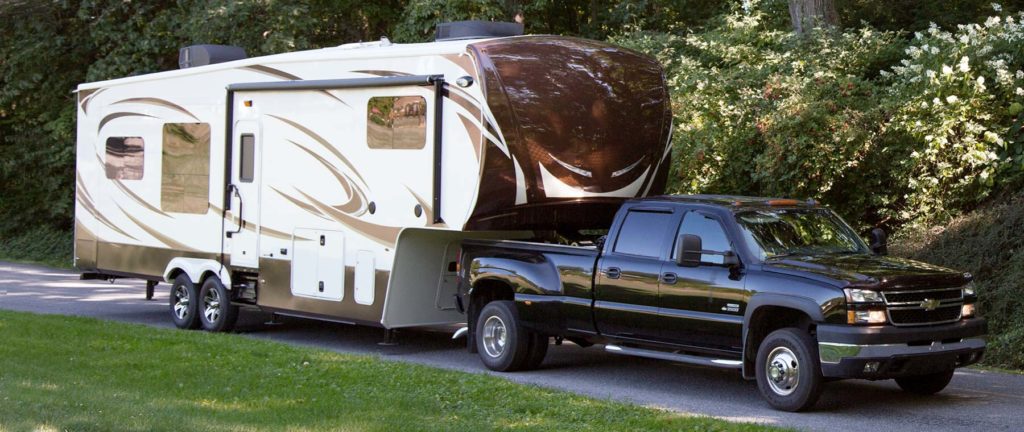
Fifth wheel trailers are easier to tow. The principle is that the towing system of the gooseneck in the pickup truck links the hanging part of the pickup truck bed and the fifth-wheeled trailer. Since the towing system is closer to the truck bed, the driving maneuverability is better.
The overhang also provides extra interior space, and the gooseneck hitch is stronger and easier to drive than the ball hitch. The biggest limitation of a fifth-wheel trailer is that it can only be towed by a pickup or medium truck with a tow bucket.
Compared with a 7-seat SUV or a Van, a pickup truck allows up to five people to travel at the same time.
And the price of pickups with large towing capacity is not cheap, so the overall price is higher than that of travel trailers. It's at $40,000 to $125,000 for larger sizes.
Pros:
Gooseneck towing system is better
Overhangs provide more interior space
There are more luxurious models to choose from
Cons:
Require a pickup truck with a specifically fitted hitch
Fewer people travel at the same time
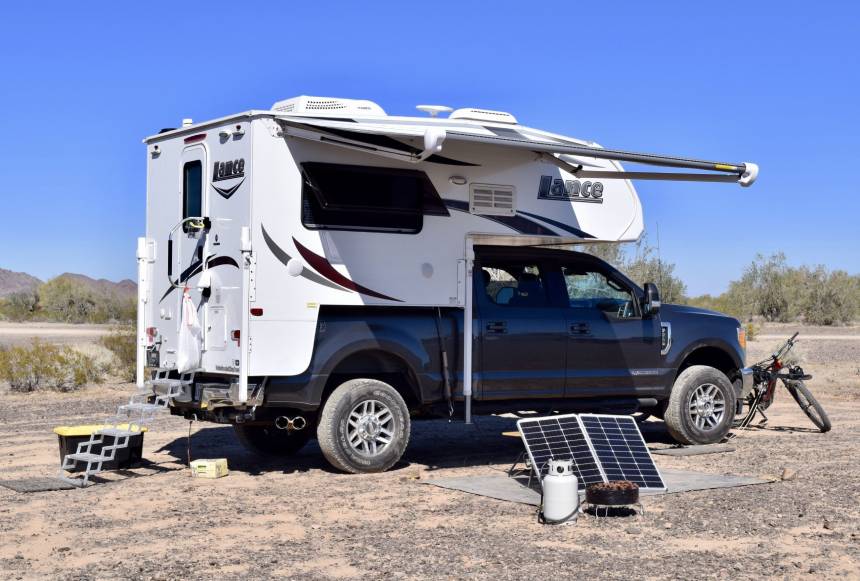
It works best for 1-3 people who have a backwoods travel, hunting, fishing, and off-roading or via rough roads to campsites. It is only for part-time use.
It is also the best options for first-timers, with the price of $8,000 to $15,000.
Pros:
Excellent parking and driving maneuverability
Cheap price
Cons:
Need the right pickup
Inconvenient to disassemble
Very small living space
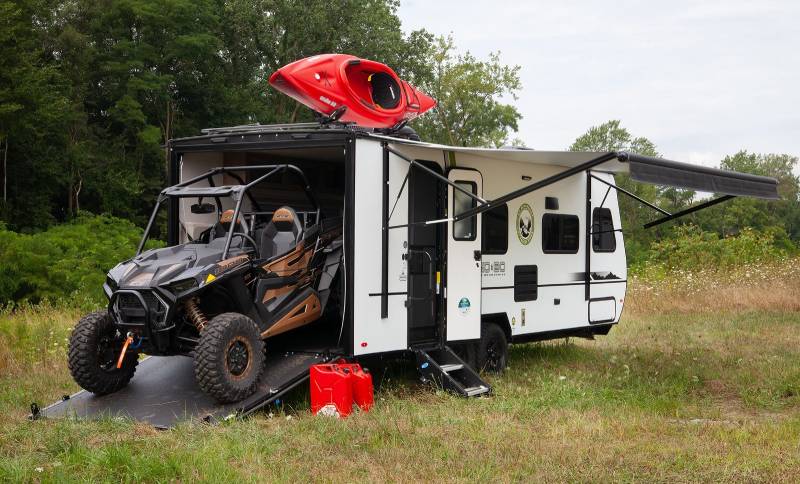
Outdoor enthusiasts who want to take part in motorsports while camping comfortably prefer this type of trailers. The toy hauler offers many of the same basic features as those expensive travel trailers. And campers love the portable garage space for all their small vehicles, tools, and gear.
The main disadvantage of these trailers is the limited living area. While a full-size trailer needs to be towed, campers only utilize a small space. And oils, fuels, and other chemicals in the trailer can create odors and harm the environment.
Pros:
Multifunction
Can be fully equipped with all necessary appliances and facilities
Cons:
smaller living space
The overall size of the railer is larger, and the vehicle needs a higher towing capacity
After reading the above information, what types of RVs do you plan to buy? Comment below and share your cool vehicles.
After the Covid 9 epidemic, people tend to the off-road trips that are more private and family-centric. More and more people have become accustomed to and like this way of travel. So, more people consider buying an RV. But, as a novice, do you know what types of RVs are there on the market? In this article, let's take a closer look.
In the Recreational Vehicle (RV) world, there are two main types. They are Motorhome and Towable trailer.
Motorhome
Motorhome has a self-propelled system. It is a vehicle that can drive without external driving force.
According to different chassis and size, it is divided into: Class A, Class B, Class C.
There is no need to link the trailer system like a trailer before traveling. It is easy to travel, but it is bulky and not suitable for trail or muddy road driving.
Class A Motorhome: the biggest of all RVs
It is the largest and most proud existence in the classification. In North America, the price of a new car ranges from $200,000 to $1000,000, with a general length of 45 feet (13.7 meters).It is diesel or gasoline-powered and provides a very large living and living space. It has a suite and more than two bathrooms. It almost has all household appliances, like a washing machine, clothes dryer, ice maker, large double-door refrigerator, dishwasher, oven, etc. The storage space below is also quite large. It is more than enough to put down the luggage and outdoor equipment of a family of five.
As it is for non-commercial use, it does not need a business license. A general driver's license can be enough.
Pros:
Larger interior living space
More luggage storage space
More electrical options and better convenience
Cons:
New car prices are high
Not suitable for all kinds of road conditions
Repairs, maintenance, and insurance are expensive
Class B Motorhome: van life and more
Also called camper van, motor caravan. This type of RV is based on the chassis of a van. So at first glance, it looks very much like an oversized van. Compared with the Class A motorhome, the Class B is much smaller in size, but it can meet the needs of two people traveling at the same time.Most Class B motorhomes do not have slide-outs. But it can basically guarantee the bathroom and household appliances. There is no washing and drying equipment as standard. You need to use the laundry service provided by the campsites. Diesel or gasoline powered.
It is the least expensive of the three classes, with the price around $80,000 to $175,000.
Because the size is small, the driving experience is the best among the three types of motorhomes. It is suitable for different road conditions. Compared with Class A motorhomes, it is much easier to drive.
Pros:
Easy to drive and park
Simple to set up
Maintenance and petrol cost less
Cons:
Small electrical facilities and fewer options
Limited living and storage space
Only 1-2 people can travel at the same time
Class C Motorhome: a mid-size options
Class C motorhomes are between 20-30 feet in length and are generally built with cabin or Van chassis. It is designed for large families on a limited budget.Compared to Class A motorhomes, they are cheaper and they have more space than Class B motorhomes.
A Class C motorhome typically has the price of $50,000 to $115,000.
Some larger models will have a master bedroom suite design, including a shower and various household appliances, similar to Class A motorhomes.
But, the driving experience is slightly inferior to the Class B motorhomes. And the fuel consumption, insurance, maintenance and repair are not cheap.
Pros:
Enough for the family of 4-8 to travel
Extra sleeping area above the cab
More electrical options
Cheaper than a Class A motorhome
Cons:
Maintenance and operating costs are not cheap
Poor driving quality
Towable RVs
The most common type of RV in North America. Towable RVs have a balance between price and space, with lengths ranging from a dozen feet to more than 30 feet. And many models also have slide-out options.Before choosing a towable RV, you need to clarify your own needs. For example, how many people need to meet the travel needs at the same time, the towing capacity of your own vehicle, etc.
Towable RVs need to be linked to the towing system before and after the trip. But the price of the vehicle, maintenance, and insurance are much cheaper.
Travel Trailer: various size options
Also known as a caravan, or camper trailer, it is the most common type of RV on the market. It is built from a standard trailer frame. There are a lot of room types and electrical options.Travel trailers can be very small or very luxurious. It has its own water supply, battery, gas, and other systems. And it can be freely matched with household appliances such as refrigerators and washing dryers. Due to its very large span in size, length, and weight, it can be pulled by a small city SUV and also a large truck.
All trailer trailers have a common problem, that is, it is more difficult for beginners to control. Especially when reversing, you will find that the skills you learned before will not work in front of the trailer. You need to practice more and more. In addition, it requires further familiarity and practice in the installation and disassembly system, leveling, and support adjustment.
Pros:
There are many model options
Much cheaper than a motorhome
Can be used for long trips
Cons:
Poor maneuverability in some road conditions
Watch out for the wobble of the tail
Reversing is more difficult
Fifth Wheel Trailers: The largest trailers
A fifth wheel trailer is in many ways like a traditional travel trailer, but it uses unique gooseneck link.Fifth wheel trailers are easier to tow. The principle is that the towing system of the gooseneck in the pickup truck links the hanging part of the pickup truck bed and the fifth-wheeled trailer. Since the towing system is closer to the truck bed, the driving maneuverability is better.
The overhang also provides extra interior space, and the gooseneck hitch is stronger and easier to drive than the ball hitch. The biggest limitation of a fifth-wheel trailer is that it can only be towed by a pickup or medium truck with a tow bucket.
Compared with a 7-seat SUV or a Van, a pickup truck allows up to five people to travel at the same time.
And the price of pickups with large towing capacity is not cheap, so the overall price is higher than that of travel trailers. It's at $40,000 to $125,000 for larger sizes.
Pros:
Gooseneck towing system is better
Overhangs provide more interior space
There are more luxurious models to choose from
Cons:
Require a pickup truck with a specifically fitted hitch
Fewer people travel at the same time
Truck Camper: best for weekend campers
The truck camper has an additional interior section above the truck bed, including the sleeping area, toilet and kitchenette. The pickup camper is the smallest RV on the market, and it's not even considered an RV in many North American states. Because it is directly mounted on the body, the rear of the pickup can still be towed, which saves space and increases outdoor functionality.It works best for 1-3 people who have a backwoods travel, hunting, fishing, and off-roading or via rough roads to campsites. It is only for part-time use.
It is also the best options for first-timers, with the price of $8,000 to $15,000.
Pros:
Excellent parking and driving maneuverability
Cheap price
Cons:
Need the right pickup
Inconvenient to disassemble
Very small living space
Sport Utility RV trailers/Toy Hauler
Motorcycles, dirt bikes, motor boats, etc. are all essential toys for outdoor adventure enthuiasts. So how can you bring these beloved babies with you when you travel with your family? Maybe we need a "toy porter" type of RV. It is generally designed with a part living area in the front, and part space in the rear for transporting motorcycles, racing cars, ATVs, rafts, etc.Outdoor enthusiasts who want to take part in motorsports while camping comfortably prefer this type of trailers. The toy hauler offers many of the same basic features as those expensive travel trailers. And campers love the portable garage space for all their small vehicles, tools, and gear.
The main disadvantage of these trailers is the limited living area. While a full-size trailer needs to be towed, campers only utilize a small space. And oils, fuels, and other chemicals in the trailer can create odors and harm the environment.
Pros:
Multifunction
Can be fully equipped with all necessary appliances and facilities
Cons:
smaller living space
The overall size of the railer is larger, and the vehicle needs a higher towing capacity
After reading the above information, what types of RVs do you plan to buy? Comment below and share your cool vehicles.
Leave a Reply
Your email address will not be published.Required fields are marked. *